MuseumsIndoor
Seelackenmuseum
St. Veit · Salzburger Sonnenterrasse
29 minRoute
Unlimited free
Unlimited free
SourceOfficial SalzburgerLand Card brochure 2025/26 — “Freier Eintritt sooft Sie wollen”
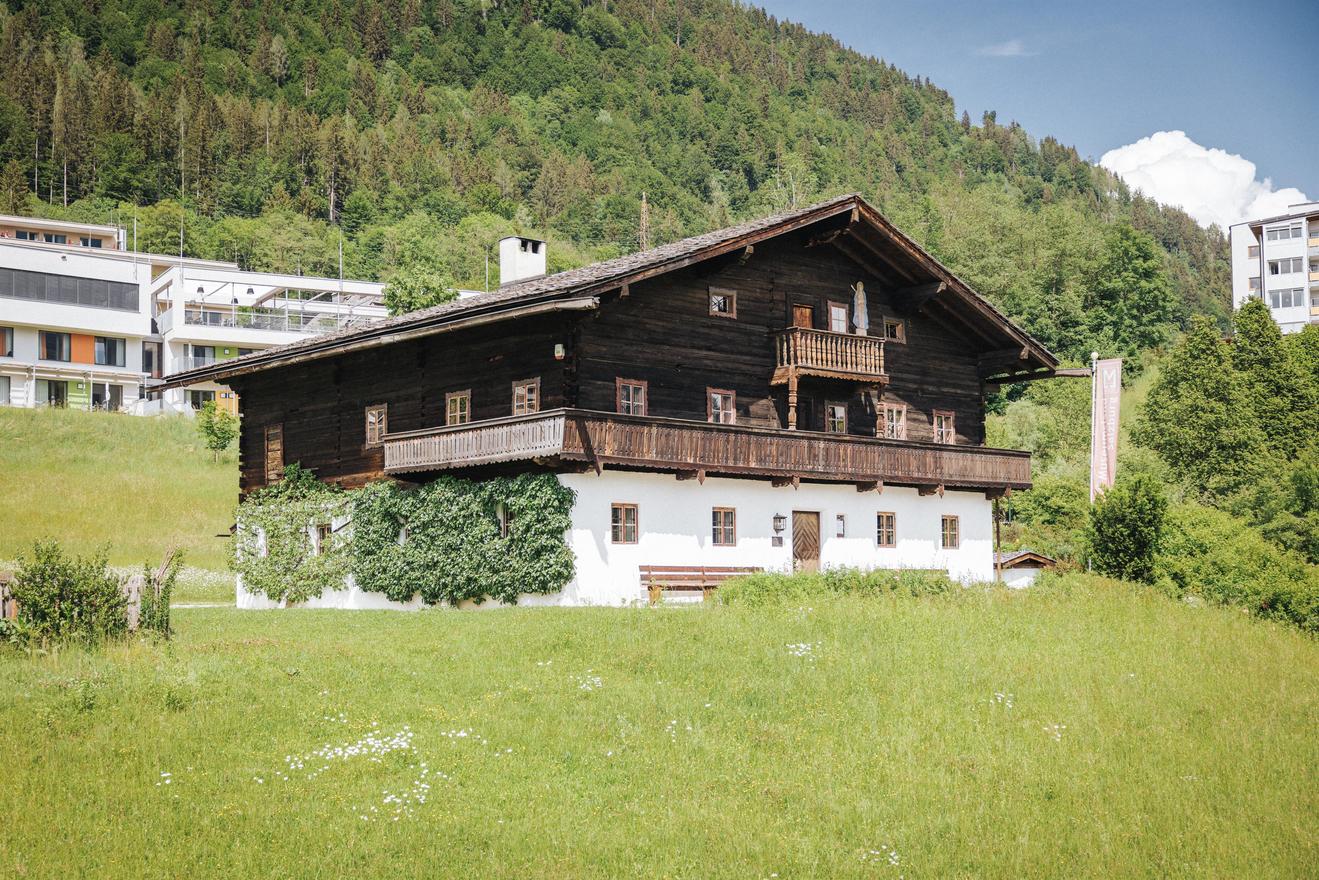
Museum in St. Veit covering 4,000 years of regional history: the first settlements, Bronze Age burial grounds, medieval mining, farming life and Thomas Bernhard, who wrote Die Kälte. Eine Isolation here. The ensemble in the Kurpark consists of the Wallnerbauernhaus, the Seelackenmühle, a granary, a farm garden and an observation beehive. There are special questions and objects for children, and a Kneipp facility and a playground are close by.
- Located in the Kurpark, with a Kneipp facility and children's playground close by
- Can be combined with the Schaubergwerk Sunnpau, both run by the Museumsverein St. Veit
The Seelackenmuseum takes visitors on a journey of discovery through 4,000 years, past the first settlements, Bronze Age burial grounds and the mines of the Middle Ages. Visitors learn what spoons from America have to do with the expulsion of the Protestants and why Thomas Bernhard wrote Die Kälte. Eine Isolation here.
There is a great deal to find out, especially for children: how can a Christmas tree be reused? What did people do when it was too cold in winter to go to the outside toilet? How is the copper for a euro coin made from a stone? And why did the Romans leave a lamp behind here?
Together with the Museumsverein St. Veit, the Seelackenmuseum is part of the UNESCO Global Geopark Erz der Alpen, and its main themes are history, mining and archaeology, farming life and Thomas Bernhard.
The ensemble is located in the Kurpark and consists of the Wallnerbauernhaus, the Seelackenmühle, a granary, a farm garden and an observation beehive. Close by are a resting place with a Kneipp facility and a children's playground.
What visitors say
This is a small regional museum by the spa park, with a farmhouse, a mill and an archaeological section. The few visitors who leave a review mention the engaged guides and, in particular, the archaeology section as the strongest point, and put the visit at roughly one to two hours. The number of reviews is very small, so the picture remains narrow.
- · Ask for a guided tour; the reviews name it as the best part of the visit.
SourceSummarised from public experiences, 2026-08-15.
Opening hours
- 03/05 to 25/10, Sun 10:00-12:00
- 03/05 to 25/10, Wed, Sun 13:00-16:00
- 06/05 to 21/10, Wed 19:00-21:00