MuseumsIndoor
DomQuartier Salzburg
Salzburg · Salzburg und Umgebung
1 h 16Route
Unlimited freeWithin the 24-hour window in the city
Unlimited free
The black corner means a condition applies.
- · Within the 24-hour window in the city
Note: the card gives either 24 hours in Salzburg city or one drive over the Grossglockner Hochalpenstrasse. Choose one for your whole card.
SourceChecked by hand
The DomQuartier links the Residenz, the Dom and the Erzabtei St. Peter in one circuit through 1300 years of power, art, music and architecture. The route leads through the state rooms of the Residenz, across the Dombogenterrasse with its view of the Baroque centre, past the organ gallery of the Dom and through the Dommuseum with the Rupertuskreuz. Allow time for an extensive route with several museums and changing exhibitions.
- one circuit taking in the Residenz, the Dom and the Erzabtei St. Peter
- the programme of the concert series Date with Mozart is published in advance on the website
- changing exhibitions in the Residenzgalerie and the Nordoratorium
The circuit through the DomQuartier shows the interplay of 1300 years of the history of rule, art, music and architecture.
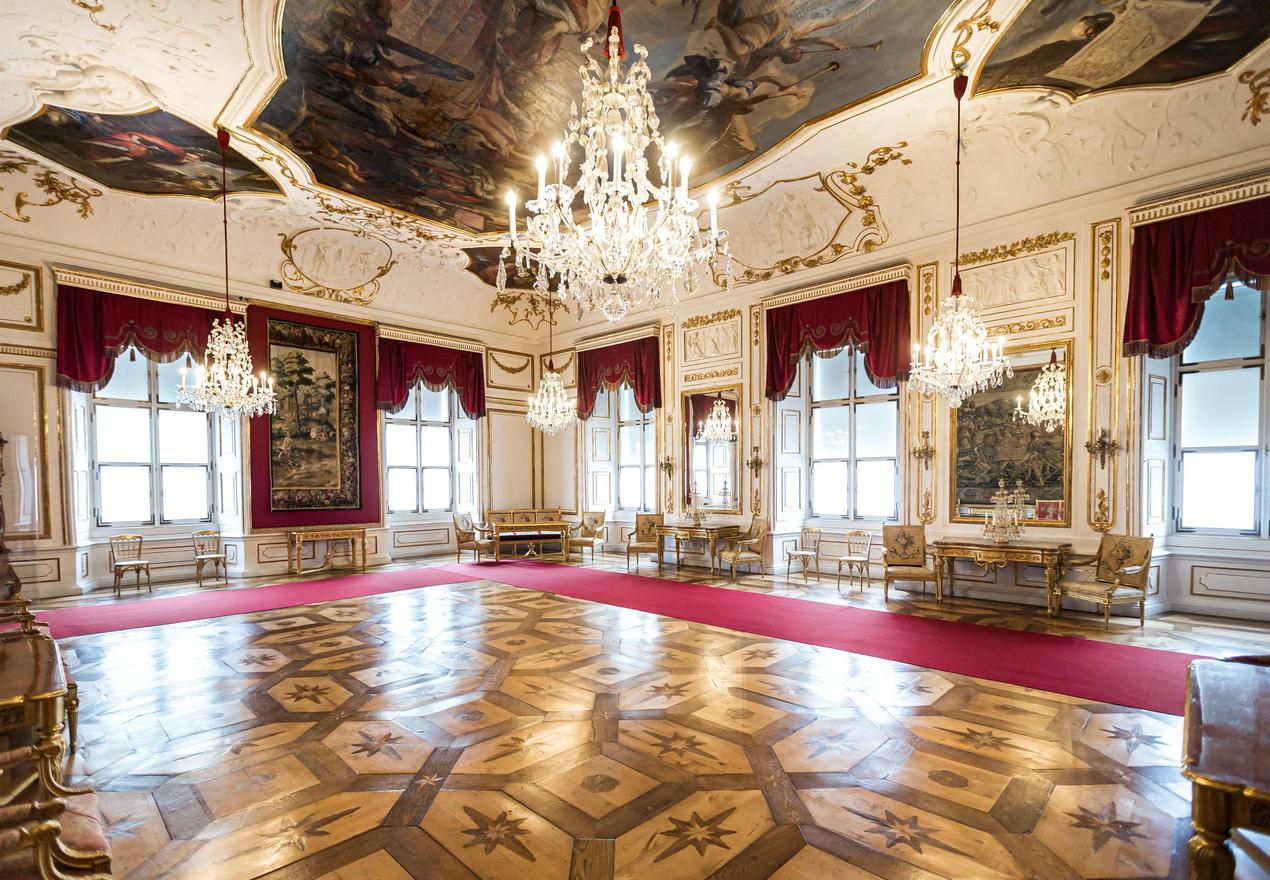
State rooms of the Residenz: for centuries the Residenz served the prince-archbishops as a residence and a place of representation. The state rooms reflect two centuries of art and style history, from the Renaissance through the Baroque to Classicism. They are also an authentic site in Salzburg music history: the first opera north of the Alps had its premiere in the Carabinierisaal, and in the Konferenzzimmer Wolfgang Amadé Mozart gave his first Salzburg court concert at the age of seven. As prince-archiepiscopal court musician he composed for these rooms and played music in them himself; alongside the Dom, they were his immediate working environment. The concert series Date with Mozart is performed in chamber music formation by the Salzburger Residenz-Ensemble, with two to four musicians depending on the programme. The programme changes continuously and is published in advance on the website of the DomQuartier.
Residenzgalerie: founded in 1923, with changing exhibitions of Dutch, Italian, French and Austrian masterpieces from the 16th to the 19th century.
Dombogenterrasse: links the Residenz with the Dom and gives a view of the Baroque heart of Salzburg, with the ensemble of Dom and Residenz and the Domplatz, Residenzplatz and Kapitelplatz. The transformation of Salzburg into a Baroque city with an Italian character began around 1600 under prince-archbishop Wolf Dietrich von Raitenau and was continued and completed by his successors. Since 2024 a digitally animated video about the building history of Salzburg has been shown in the Dombogengang.
Nordoratorium: in the Nordoratorium of the Dom, changing exhibitions are held in four rooms lying in a single line. The stucco work dates from 1628, the year the Baroque cathedral was consecrated. Of particular note is the Rupertusoratorium, whose altar and ceiling paintings show scenes from the life of Saint Rupert.
Domorgelempore: the circuit leads across the organ gallery with the main organ. From there the whole interior of the Salzburger Dom can be surveyed, which is counted among the great monumental buildings of the early Baroque.
Dommuseum: the Dommuseum in the Südoratorium was opened in 1974 and shows art treasures from 1300 years of church history. Its core is the cathedral treasury, with precious liturgical vessels such as chalices and monstrances, and with Gothic and Baroque paintings and sculptures from Salzburg churches and monasteries. The most important piece is the Rupertuskreuz, the largest surviving metal cross from the early Middle Ages and one of the oldest known Christian works of art in Austria.
Kunst- und Wunderkammer: laid out by prince-archbishop Guidobald Graf Thun, in order to amaze guests with exotic and curious objects from art, nature and technology and thus to show the wealth of the country. The marble floor, the stucco ceiling and the display cases are still original. With purchases and loans the Kunst- und Wunderkammer was reconstructed in 1974 as a Baroque cabinet of curiosities.
Lange Galerie: 70 metres long and decorated with extensive ceiling stucco work. The gallery is regarded as one of the earliest gallery buildings north of the Alps and served until 1803 as the picture gallery of the prince-archbishops. Today it holds large paintings from the art collection of the Erzabtei St. Peter.
Museum St. Peter: in the Wallistrakt, with a selection from the art treasures of the Erzabtei St. Peter, the oldest monastery in the German-speaking area. Besides liturgical vessels, paintings and musical instruments, the showpiece of the treasury is the Mitra pretiosa from around 1480, richly set with precious stones and pearls.
What visitors say
One ticket gives a continuous route through the Residenz, across the arched terrace to the galleries of the cathedral and on to St. Peter. Visitors name above all the view from the gallery into the nave of the cathedral as the strongest part, and appreciate the free audio guide that runs on one's own telephone. Most advise allowing two hours; with one hour it is a rush. Despite the touristy square in front of it, it is often quiet inside, and not every part is to everyone's taste: the chamber of art and curiosities is skipped by some.
- · Allow about two hours for the whole round.
- · The audio guide runs on one's own telephone and is available in several languages.
- · Even when the Domplatz is busy, it is usually quiet inside.
SourceSummarised from public experiences, 2026-08-15.
Opening hours
- 01/07 to 31/08, daily 10:00-18:00
- 02/09 to 30/11, Mon, Wed, Thu, Fri, Sat, Sun 10:00-17:00
- 01/12 to 23/12, daily 10:00-17:00
- 25/12 to 31/12, daily 10:00-17:00